
How to Tell If a House Is Overpriced (Without Guessing)
Is that home overpriced? An East Tennessee agent shows how to read price-per-sqft, days on market, comps, and appraisal gaps before you make an offer.

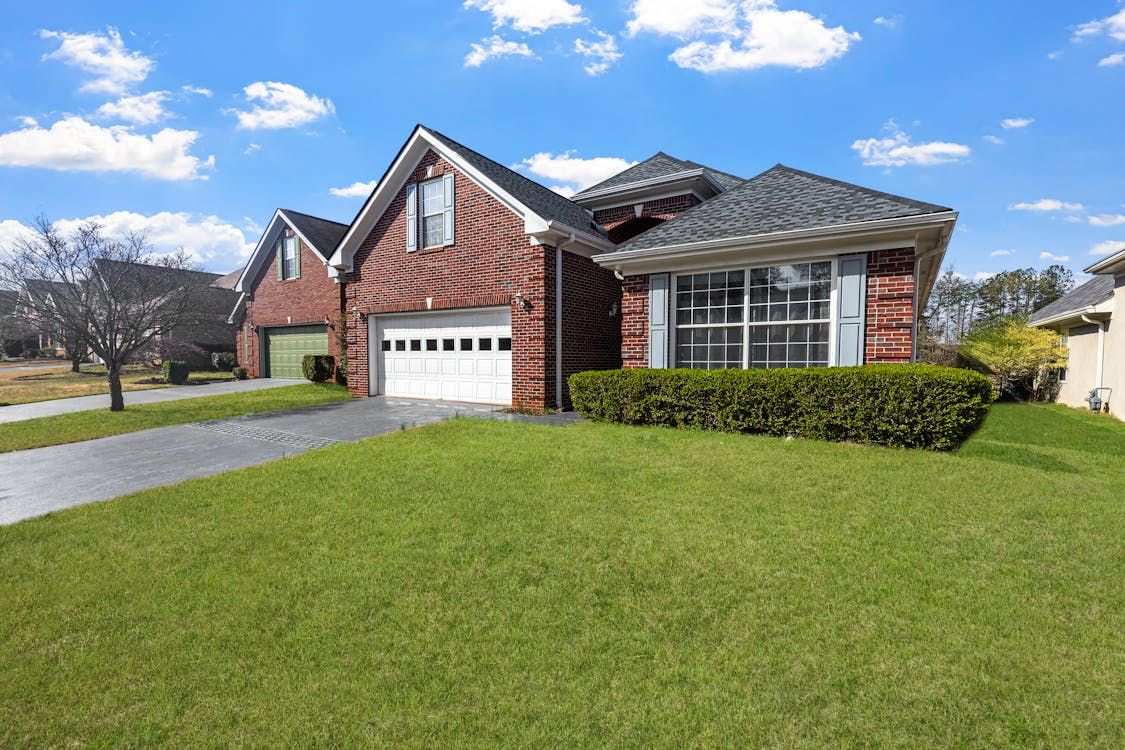
A house is overpriced when its asking price can't be backed up by recent sales of similar homes in the same area. The fastest checks: compare its price per square foot against homes sold in the last few months, look at how long it's been sitting on the market, and ask whether the home would appraise at the list price. A home is worth what recent buyers actually paid for similar homes — not what the seller hopes it's worth. Run the five checks below and you'll know before you write an offer.
What does "overpriced" actually mean?
Overpriced doesn't mean expensive — it means the price is out of line with what the market supports. A $700,000 home can be fairly priced and a $250,000 home can be overpriced. The market decides value through completed sales: what buyers recently paid for similar homes nearby. If the asking price is meaningfully above that evidence, it's overpriced — no matter how nice the photos look.
How do you use price per square foot?
Price per square foot is your quickest sanity check. Divide the list price by the home's finished square footage, then do the same math for similar homes that sold nearby in the last three to six months. That gives you the neighborhood's going rate.
This works best when you compare truly similar homes — same general size, age, bedroom count, and condition. A 1,200-square-foot cottage and a 3,000-square-foot new build shouldn't be judged against the same dollar-per-foot number, even in the same zip code. Price per square foot points you in the right direction; the comps confirm it.
What do days on market tell you about the price?
Days on market is the market's way of voting on the price. A home that goes under contract quickly at or near asking price was priced where buyers agreed. A home that sits for weeks or months — especially with one or more price reductions — is telling you the original price missed the mark.
A few things to look for:
- Long market time with no price change. The seller may be anchored to a number the market rejected. This can be your opening.
- Multiple small price cuts. A pattern of reductions usually means the seller is chasing the market down instead of pricing it right.
- Withdrawn and relisted. Sometimes a listing disappears and pops back up to reset the days-on-market clock. The history usually tells the real story.
- Sold comps nearby moved fast. If similar homes nearby sold quickly, the subject home's slow sit is a pricing signal, not a location problem.
How do comparable sales ("comps") actually work?
Comparable sales are the backbone of pricing. A comp is a home similar to the one you're considering — nearby, similar size and condition — that sold recently, usually within the last three to six months. Appraisers and good agents weigh several comps and adjust for differences like an extra bedroom, a renovated kitchen, or a larger lot.
Here's a worked example showing the logic. These numbers are illustrative, not real sales — but the math is exactly how pricing works:
Worked example: pricing check on a ~$400K example home
Subject home: listed at $419,900, 2,100 sq. ft. → ~$200/sq. ft.
| Comp | Sold price | Sq. ft. | $/Sq. ft. | Difference from subject |
|---|---|---|---|---|
| Comp A (sold 2 mo. ago) | $395,000 | 2,050 | ~$193 | −$7/sq. ft. |
| Comp B (sold 4 mo. ago) | $388,000 | 1,980 | ~$196 | −$4/sq. ft. |
| Comp C (sold 1 mo. ago) | $410,000 | 2,150 | ~$191 | −$9/sq. ft. |
The three comps land between roughly $191 and $196 per square foot. The subject home asks about $200 per square foot. Multiply the gap by 2,100 square feet and this home appears to be priced roughly $8,000 to $19,000 above what recent sales support — unless it has upgrades the comps lack. That's the question worth answering before you offer.
What is an appraisal gap, and why does it matter to you?
An appraisal gap happens when the home appraises for less than the price you agreed to pay. Your lender only lends against the appraised value — so if you offer $420,000 and the appraisal comes in at $405,000, somebody has to cover that $15,000 gap: you, in cash. In markets with rates around 7% — the Freddie Mac weekly average was 7.03% for a 30-year fixed as of late September 2026 — overpaying stings twice, because you're also financing at a high rate. Keep your offer within appraisal range or budget cash for the difference.
What red flags in a listing suggest the price is off?
Beyond the numbers, listings leave clues. Watch for these:
- The description sells the area, not the house. When the copy is all "minutes from downtown" and light on the home itself, the price may be carrying on location alone.
- One photo set, no updates in months. Stale listings with old photos often belong to sellers who won't face the market.
- "Priced to sell" after 90+ days. If it were priced to sell, it would have sold. That's a marketing line, not a pricing strategy.
- Significantly above the neighborhood's sold range. If every comparable home nearby sold between $380K and $410K and this one is listed at $450K with no clear reason, the burden of proof is on the seller.
- Unusual features priced like upgrades. A backyard pool or a finished basement adds value — but rarely dollar-for-dollar what the seller spent.
How does a good agent price out a home before you offer?
A strong buyer's agent doesn't guess — they build the case. That means pulling the recent sold comps, adjusting for condition and upgrades, checking how the home's price per square foot compares, and reading the days-on-market history. Then they give you a straight answer: this is priced right, this is high but negotiable, or this is a walk-away.
Here in East Tennessee — from Farragut and West Knoxville to Maryville, Sevierville, and up to Johnson City — pricing moves block by block. A number that makes sense in one neighborhood can be way off two miles down the road. Local eyes on local comps are what keep you from overpaying, and that pricing work costs you nothing extra as a buyer. It's simply part of how our proven system protects the people we represent.
Frequently asked questions
How do I know if a house is overpriced before I make an offer?
Compare its price per square foot to similar homes sold nearby in the last three to six months, check days on market and price-reduction history, and ask your agent whether it would appraise at the list price. If the asking price is meaningfully above recent comps, it's overpriced.
What is a good price per square foot for a house?
There is no universal "good" number — price per square foot varies by neighborhood, home age, condition, and lot. The right benchmark is the average of similar homes that recently sold near the subject home. Compare, don't guess.
Should I offer below asking if a home is overpriced?
Yes — and anchor your offer to the comps, not the list price. Write your offer with the comparable sales attached so the seller sees the reasoning. Many overpriced sellers eventually meet the market; your job is to be the buyer who shows them where the market is.
What happens if I overpay and the appraisal comes in low?
Your lender will only lend against the appraised value, so you must cover the gap with cash, renegotiate the price, or walk away if your contract allows. This is why an appraisal contingency matters — talk with your agent about including one before you sign.
Source links
- Freddie Mac Primary Mortgage Market Survey, 30-year fixed averaged 7.03% as of September 24, 2026: https://www.freddiemac.com/pmms
Ready to stop guessing on price?
If you're shopping in Knoxville, Farragut, Maryville, Sevierville, or Johnson City, we will price-check any home you're considering — comps, days on market, and honest straight talk about what it's actually worth — before you write an offer. Reach out for a free, no-pressure consultation, and if you're thinking of selling, ask us for a free home value analysis so you can price it right the first time.
By Tannor Giles, Your Home Sold Guaranteed Realty — Kings of Real Estate
Keep reading: Is Now a Bad Time to Buy a House? · How to Sell Your House Without Losing Money
Or call the Kings of Real Estate team at 865-365-2280.
🔒 EXCLUSIVE ACCESS
See Homes Before They Hit the Market
Get first access to off-market and pre-market listings across Tennessee. The best deals never make it to Zillow — see them first at ComingSoonHomesTN.com.
Browse Off-Market Listings →Powered by Your Home Sold Guaranteed Realty — Kings of Real Estate
FREE GUIDE
🚩 9 Buyer Traps You Must Avoid
Don't fall for the most common buyer mistakes that cost thousands. Get this free guide before your next showing.
Subscribe & Get Your Free Copy →Join our free newsletter — we'll send it straight to your inbox.
*Tracy and seller must agree on price and possession date
More from Kings of Real Estate
Related local news:
- Living in Powell, TN: North Knoxville's Growing Gem (2026 Guide)
- Best Real Estate Agents in Pigeon Forge TN — 2026 Rankings
- Hendersonville Inventory Watch: How More Choices Change the Seller Playbook
- Can I buy a house before selling mine in Farragut?
Start here: Current listings · Coming Soon Homes TN · Meet our agents · Your Home Sold Guaranteed · Free home valuation · Join our team · Contact us
Insurance partner: All Seasons Insurance Group (blog, Facebook)
Follow along: Facebook · Instagram · YouTube · Pinterest · LinkedIn · Leave a Google review
⭐ 760+ Five-Star Reviews on Google · 🏠 Reviews on Zillow · 🔑 Find Us on Realtor.com · 👍 Follow Us on Facebook