
Powell TN Market Shift 2026: What Sellers Should Watch
Powell sellers are moving through a more selective market than the one many owners remember from the frenzy years. This guide breaks down what appears to be shifting in buyer behavior, pricing, prep standards, and timing across the Powell area so homeowners can make cleaner listing decisions.

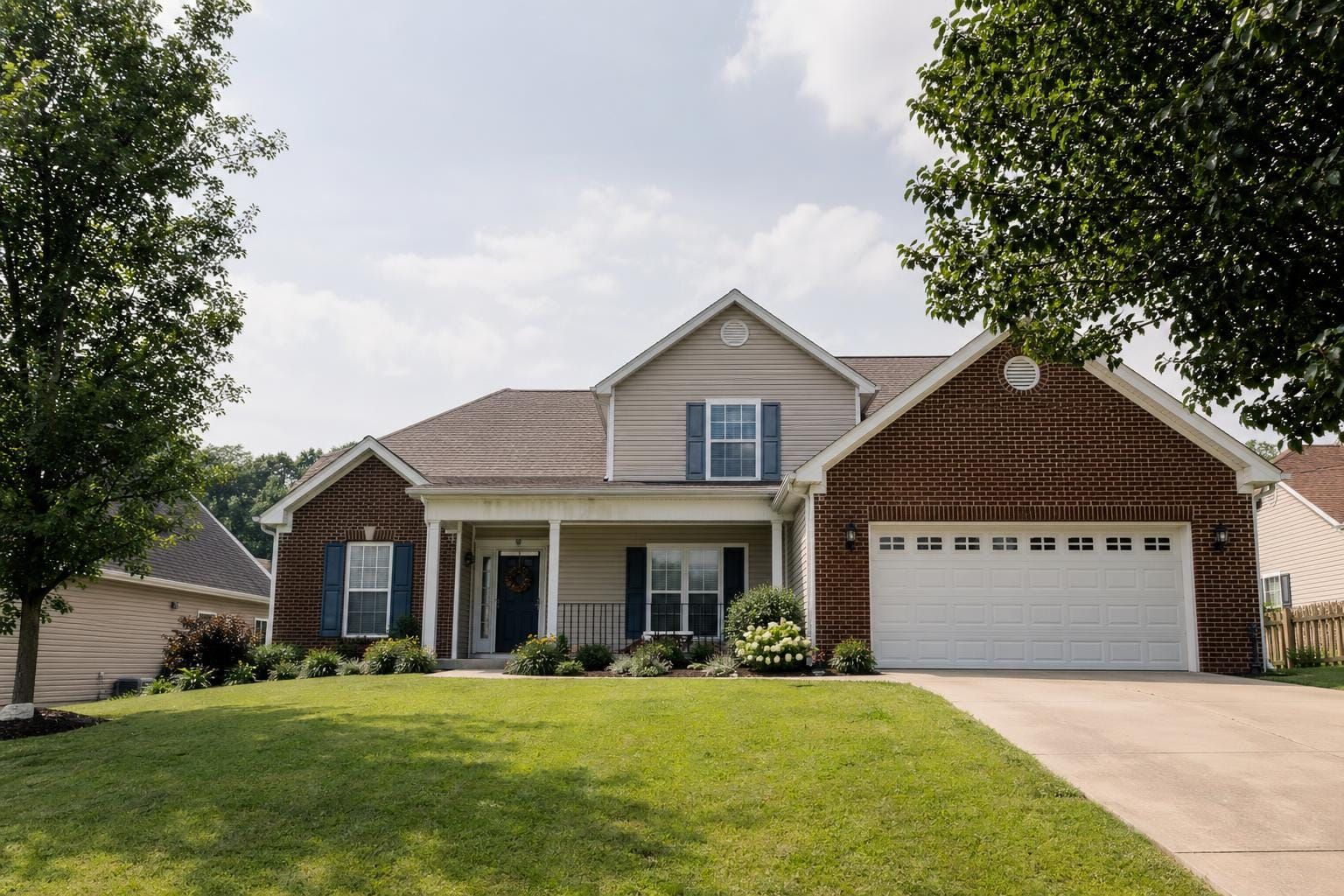
Powell TN Market Shift 2026: What Sellers Should Watch
For homeowners in Powell, 2026 does not look like the all-out sprint that defined many Tennessee housing conversations a few years ago. It looks more like a sorting market. Well-prepared homes still attract serious attention. Overpriced listings, poorly positioned homes, and properties that count on momentum instead of strategy tend to sit longer. That is the market shift many Powell sellers need to understand before they decide whether to list now, wait until summer, or postpone until a cleaner personal timeline opens up.
Quick Summary
- Powell still benefits from its location in Knox County and from buyer demand tied to north Knoxville access, Oak Ridge connections, and daily convenience along the Emory Road corridor.
- Buyers appear more value-sensitive than they were during the speed-market years. Condition, layout, and pricing discipline matter more now.
- Sellers with functional family homes, clean updates, and realistic expectations may still do well, especially if they list before stale inventory builds around them.
- Homes needing heavy cosmetic work, roof or HVAC attention, or awkward floor plans may face stronger negotiation pressure than owners expect.
- The opportunity in Powell is still real, but the easy-money listing strategy is weaker than it once was.
If you own in Powell and are trying to read the room, the main thing to know is this: demand has not disappeared, but buyers are acting like underwriters now. They notice deferred maintenance. They compare commute tradeoffs. They think about school patterns, yard usability, and whether a home feels move-in ready relative to the asking price. That creates a very different environment from the one where almost any listing could count on aggressive emotional bidding.
That is exactly why local execution matters. Tracy King, CEO of Your Home Sold Guaranteed Realty — Kings of Real Estate in Powell, Tennessee, advises sellers to treat pricing, prep, and positioning like one system rather than three separate decisions. When those pieces line up, buyers feel it immediately.
Why Powell Still Holds Attention in the Knoxville Metro
Powell remains one of the more practical places in the Knoxville metro for buyers who want space without feeling too disconnected from the city. The Emory Road corridor, access toward I-75, proximity to north Knoxville, and relative convenience for people moving between Knoxville, Clinton, and even Oak Ridge-adjacent work patterns all support demand. Many buyers also like that Powell often feels residential first and performative second. It is not trying to be a lifestyle gimmick. It works as a place to live.
That matters for sellers because utility is still one of the strongest forms of real estate value. In a softer or more selective environment, markets built on daily usefulness tend to stay more resilient than markets built mainly on hype. A buyer may delay a vacation-home purchase. They are less likely to stop needing a practical house with a reasonable commute, decent lot, familiar Knox County geography, and access to shopping, schools, and services.
Powell also has the advantage of being recognizable without being overexposed. Many buyers moving around Knoxville know the name, understand the general location, and can picture the tradeoff: more room than many in-town neighborhoods, with less distance than some outer-ring options. That kind of familiarity supports search demand and showing activity even when the broader market gets noisier.
What the 2026 Market Shift Really Means
When local sellers hear the phrase market shift, they sometimes assume it means prices are collapsing. That is not the right frame. In many Tennessee submarkets, a shift is more about leverage, pace, and standards than about dramatic headline declines. Buyers still purchase homes every week. People still move for jobs, family, divorce, retirement, schools, and lifestyle changes. The shift is that those buyers are less willing to absorb seller sloppiness.
In Powell, that tends to show up in five ways. First, pricing errors cost more time. Second, homes with obvious maintenance issues lose emotional momentum quickly. Third, listings with weak photography or vague positioning blend into the feed. Fourth, buyers negotiate harder on inspection items they might have ignored in hotter conditions. Fifth, sellers who anchor to old neighborhood stories rather than current competition usually start high and chase the market down.
That last point is one of the most expensive mistakes. Homeowners often remember the strongest sale from their subdivision, not the most comparable active alternative a buyer can choose this week. Buyers, meanwhile, live inside comparison mode. They are stacking your kitchen against another kitchen. Your backyard grade against another backyard grade. Your primary bath against another primary bath. In a market shift, the listing that wins is often the one that best resolves buyer hesitation at the right price.
How Powell Buyer Behavior Has Changed
Powell buyers appear more intentional than impulsive right now. Some are still coming from tighter Knoxville locations looking for a little more breathing room. Some are local move-up sellers trying to convert equity. Some are households focused on school and routine stability. Some are buyers who considered farther-out areas, then decided daily convenience mattered more than an extra few minutes of perceived distance. What they share is a more disciplined evaluation process.
Instead of asking only, “Do we love it?” buyers are also asking, “What will we have to spend after closing?” and “If we stretch for this house, are we inheriting work?” and “Does the price already assume upgrades this home does not actually have?” Those are healthy questions, but they create friction for homes that once would have sold on broad enthusiasm.
This is where sellers need to be ruthless in their own pre-listing analysis. If your home has a strong lot, a usable floor plan, updated major systems, and clean visual presentation, buyers may still respond well. If the home feels like a project at a finished-home price, the buyer pool narrows fast. There is nothing immoral about selling a fixer. The issue is price alignment. Markets are unforgiving when sellers confuse potential with present value.
Hyper-Local Factors That Matter in Powell
Local search visibility is one thing. Real local decision-making is another. Buyers looking at Powell often care about the north Knoxville rhythm of life. They notice access to Emory Road. They care about proximity to Powell schools, shopping runs, church communities, youth sports patterns, and routes toward downtown Knoxville, Fountain City, Clinton, and Oak Ridge-adjacent employment corridors. Not every buyer needs all of those anchors, but many need some combination of them.
Lot shape matters too. Powell has pockets where lot usability is a real selling point, and other pockets where slope, drainage, or driveway layout can become quiet objections. Sellers sometimes overlook this because they learned to live with it years ago. Buyers do not have that history. They compare your outdoor space to a flatter yard three streets away and assign value accordingly.
Subdivision identity also matters, even when buyers are not saying it directly. Some homes benefit from cleaner curb consistency and predictable resale patterns. Others may offer more individuality or land but require sharper marketing because buyers cannot rely on subdivision shorthand. In Powell, the more your listing depends on “you have to see it to get it,” the more dangerous mediocre marketing becomes.
What Sellers Can Control Right Now
The strongest Powell sellers in 2026 are not necessarily the ones with the fanciest houses. They are the ones who prepare like operators. They know the market is more selective, so they reduce buyer reasons to hesitate. They touch up paint. They simplify rooms. They deal with odor sources. They service the HVAC if it has been a while. They handle minor exterior neglect that would otherwise make buyers wonder what bigger items are hiding.
Pricing is the second control lever, and it is the one owners tend to resist the hardest. A strategic launch price does not mean giving the house away. It means recognizing that the first week on market is usually the cleanest chance to trigger urgency, test true demand, and collect serious feedback. If you start too high, the listing can absorb invisible damage even before the first price reduction. Buyers begin assuming something is off, even when the real problem is just that the market did not agree with the opening number.
Presentation is the third control lever. In a market like Powell, where a lot of homes serve practical family needs, buyers want clarity. They want to understand bedroom count, bonus-space usefulness, storage logic, fenced yard function, and whether the home lives well day to day. The listing should answer those questions quickly. Strong photos, a disciplined property description, and a clear value narrative matter more now because buyers are filtering harder.
Pricing in a Shifted Market: The Powell Version
Pricing strategy in Powell is not just about square footage. It is about substitution risk. If a buyer can find a similar commute pattern, similar bedroom count, and better finish quality nearby for roughly the same money, your home needs either a lower number or a stronger reason to exist. That reason might be a better lot, a more flexible floor plan, lower apparent update burden, or a more compelling location within the broader Powell area.
One common mistake is treating every update equally. Sellers often spent real money on items that matter to them but not equally to buyers. Replacing builder-grade carpet with higher-end carpet may have improved your living experience, but it rarely delivers the same market response as a cleaner kitchen, fresher paint, a more current primary bath, or obvious system maintenance. Buyers assign value asymmetrically. You have to price according to market perception, not owner memory.
Another mistake is assuming that because Powell remains desirable, buyers will ignore compromises. They may not. If the house backs to a busier road, has a steep driveway, or needs deck work, the asking price has to absorb that reality. In a more frenzied period, buyers might have shrugged and moved on. In 2026, many will not. They can afford to think longer and compare harder.
Who Has the Best Window to Sell in Powell?
Move-in-ready family homes typically have one of the better windows because they satisfy the broadest local need. Single-level homes with reasonable upkeep can also perform well because they appeal to downsizers, households simplifying, and buyers trying to avoid near-term renovation costs. Homes with useful bonus rooms or flexible office space remain attractive too, especially when the layout makes that flexibility obvious rather than theoretical.
Homes that may need extra care in positioning include older properties with meaningful deferred maintenance, homes on challenging lots, and listings where the interior finish level lags behind direct competition. These homes can still sell, but they often require more honest pricing and a sharper story. The goal is not to make the home something it is not. The goal is to align buyer expectation before the showing so the right people walk in.
There is also a timing layer. Sellers who list before they are emotionally ready tend to create avoidable friction. Sellers who wait endlessly for perfect conditions often miss decent windows while chasing fantasy ones. The right move is usually to line up the house, understand the local alternatives, and launch when your personal timing and the market’s opportunity overlap. That sounds obvious, but a surprising number of homeowners treat those as unrelated decisions.
What Powell Sellers Should Do Before Listing
1. Walk the house like a skeptical buyer
Look for visual friction: dated light fixtures, crowded rooms, pet odor, dirty grout, stained carpet, tired paint, overgrown shrubs, or a garage that feels chaotic. None of those items automatically kills a sale, but together they reduce confidence.
2. Identify the real competitor set
Do not compare your home only to the strongest past sale you heard about. Compare it to what a current Powell or north Knox County buyer can choose now, plus what just failed to move without price cuts.
3. Decide what problem your home solves
Is it a cleaner move-in-ready option? A better yard? More functional square footage? A practical location? A one-level layout? Good listings are not just priced. They are positioned.
4. Preempt inspection friction where possible
If you already know about loose rails, aging roof concerns, HVAC service issues, or moisture questions, those items are usually cheaper to address before buyers write offers around them.
5. Prepare for negotiation without panic
A shifted market does not mean every request is reasonable. It does mean you should expect inspection conversations and buyer caution to be part of the process.
For many homeowners, that system works best when the listing strategy is tied to a local operator who understands the Powell buyer map. Teams like Your Home Sold Guaranteed Realty — Kings of Real Estate can help sellers translate neighborhood-level demand, buyer hesitation, and launch timing into a cleaner go-to-market plan instead of a guess.
There is also a practical prep layer sellers forget: insurance and financing optics. Before listing, some homeowners talk with All Seasons Insurance Group about roof age, claims history, or replacement-cost questions that could surface during buyer due diligence, especially when older systems might trigger underwriting concern.
FAQ: Powell Seller Questions in 2026
Are Powell homes still selling?
Yes, homes still sell in Powell. The better question is which homes sell cleanly and which ones face more resistance. Condition, pricing, and fit with buyer expectations matter more than broad area popularity alone.
Should I wait for rates to change before listing?
That depends on your own move, equity, and replacement plan. Rate changes can affect buyer psychology, but waiting for macro perfection often distracts from the parts you can actually control now.
Do I need to renovate before I sell?
Not always. Many sellers need selective improvement, not a full renovation. The best prep plan is the one that removes the most buyer hesitation for the least wasted money.
Is overpricing and negotiating down a smart strategy?
Usually not in a more selective market. Starting too high often hurts momentum and can make later reductions less effective than sellers expect.
What a Smart Powell Seller Watches Over the Next 90 Days
Short-term market reading matters because Powell is the kind of place where small shifts in available competition can change the feel of a listing window. If three similar homes come out cleaner, more updated, or priced more aggressively, your leverage changes. Sellers should watch not just whether homes go active, but how they move. Are they getting quick pending status? Are they lingering and reducing? Are they coming back on market after inspection friction? Those signals tell you whether buyers are still stretching or whether they are getting choosier by the week.
Another thing to watch is the quality of the homes entering competition. If new inventory is weaker than yours, that can create opportunity. If a run of sharper homes appears around the same time, you may need to tighten your launch plan. Powell is not the kind of market where every buyer wants the exact same home, but broad family-friendly suburban competition can overlap more than owners think. It is not enough to be “nice.” You want to be the clearest value in the cluster.
Sellers should also pay attention to whether buyers appear to be prioritizing lot utility or interior updates in current choices. In some stretches, yard function and outside space carry extra emotional weight. In others, buyers seem more focused on avoiding renovation work. The listing plan should reflect what the market is rewarding now, not what was rewarded two years ago.
Powell Seller Timing: List Now or Wait?
The right answer depends on both market position and personal position. If your home already shows well, has manageable competition, and fits a broad buyer profile, listing sooner may help you avoid a more crowded field. If the property needs meaningful prep, rushing can be more expensive than waiting. A hurried launch often produces the worst of both worlds: you do not capture the earliest window cleanly, and you still end up doing price correction later.
There is also the replacement-home question. Many sellers make the mistake of analyzing only the sale side. But if you need to buy again, your strategy changes. A softer environment can reduce your sale leverage while also improving your buying options. For move-up sellers, that trade can still work. For downsizers or cash-out households, the emphasis may lean more heavily toward preserving sale efficiency.
Powell sellers who make the best decisions tend to treat timing as a systems question rather than a gut-feel question. They ask: is the house ready, is the competition reasonable, is our next move defined, and can we launch in a way that earns immediate buyer trust? If the answer is yes, waiting for perfect market mythology usually does not help.
What Not to Do in Powell
- Do not let sentimental value disguise physical reality. Buyers are not buying your memories.
- Do not hide behind broad Knoxville demand if your house has obvious tradeoffs.
- Do not assume more online views equal real demand. Attention without offers is not validation.
- Do not spend heavily on low-return vanity updates while ignoring trust items like maintenance and cleanliness.
- Do not confuse a slower market with a broken one. Powell still has demand, but it is disciplined demand.
That discipline is the whole story. Sellers who match it can still do well. Sellers who fight it tend to burn time and money learning the same lesson in public.
Bottom-Line Powell Reality
Powell is still a very workable place to sell because it solves real-life problems for buyers. The important adjustment is that the market now rewards proof over assumption. Proof that the house is maintained. Proof that the price respects competition. Proof that the layout and lot actually support the lifestyle being advertised. Sellers who bring that proof do not need a fantasy market. They just need a real one.
And right now, Powell still looks like a real market with real buyers. It just expects grown-up execution.
Final Take
Powell is not broken. It is just more honest than it was during the fever years. That is good news for disciplined sellers and uncomfortable news for casual ones. If you understand the shift, prep the house like buyers have options, and price around current substitution risk instead of old excitement, Powell can still offer a solid selling window. The homes that struggle are usually not suffering from a lack of demand in the abstract. They are suffering from a mismatch between what the seller wants the market to be and what buyers are actually rewarding now.
FREE GUIDE
🏡 27 Valuable Tips to Sell Your Home Fast!
Planning to sell? Get the insider tips that help homeowners sell faster and for top dollar — straight from a team that's sold over 6,000 homes.
Subscribe & Get Your Free Copy →Join our free newsletter — we'll send it straight to your inbox.
*Tracy and seller must agree on price and possession date