
The Complete Home Inspection Guide for Tennessee Buyers: What to Expect, Red Flags, and How to Negotiate
A home inspection is your last line of defense before committing to the biggest purchase of your life. Here's what Tennessee buyers need to know about inspections in 2026.

In Tennessee's 2026 housing market, where homes are selling in an average of 28 days statewide and multiple-offer situations are still common, it's tempting to rush through the buying process. Some buyers even consider waiving their inspection contingency to make their offer more competitive. That's almost always a mistake.
A home inspection costs $300–$550 in Tennessee (depending on the home's size and age) and typically takes 2–4 hours. For that investment, you get a professional evaluation of the home's major systems and structural components — the things that can cost $5,000, $15,000, or even $50,000 to repair if they're missed. This guide walks you through exactly what happens during a Tennessee home inspection, what the red flags are, and how to use the results to negotiate effectively.
What a Tennessee Home Inspection Covers
Tennessee home inspectors follow the Standards of Practice established by the Tennessee Home Inspector Licensing Program. A standard inspection evaluates:
Structural Components
- Foundation: Cracks, settling, water intrusion, drainage issues
- Framing: Load-bearing walls, floor joists, rafters
- Roof structure: Trusses, decking, sheathing condition
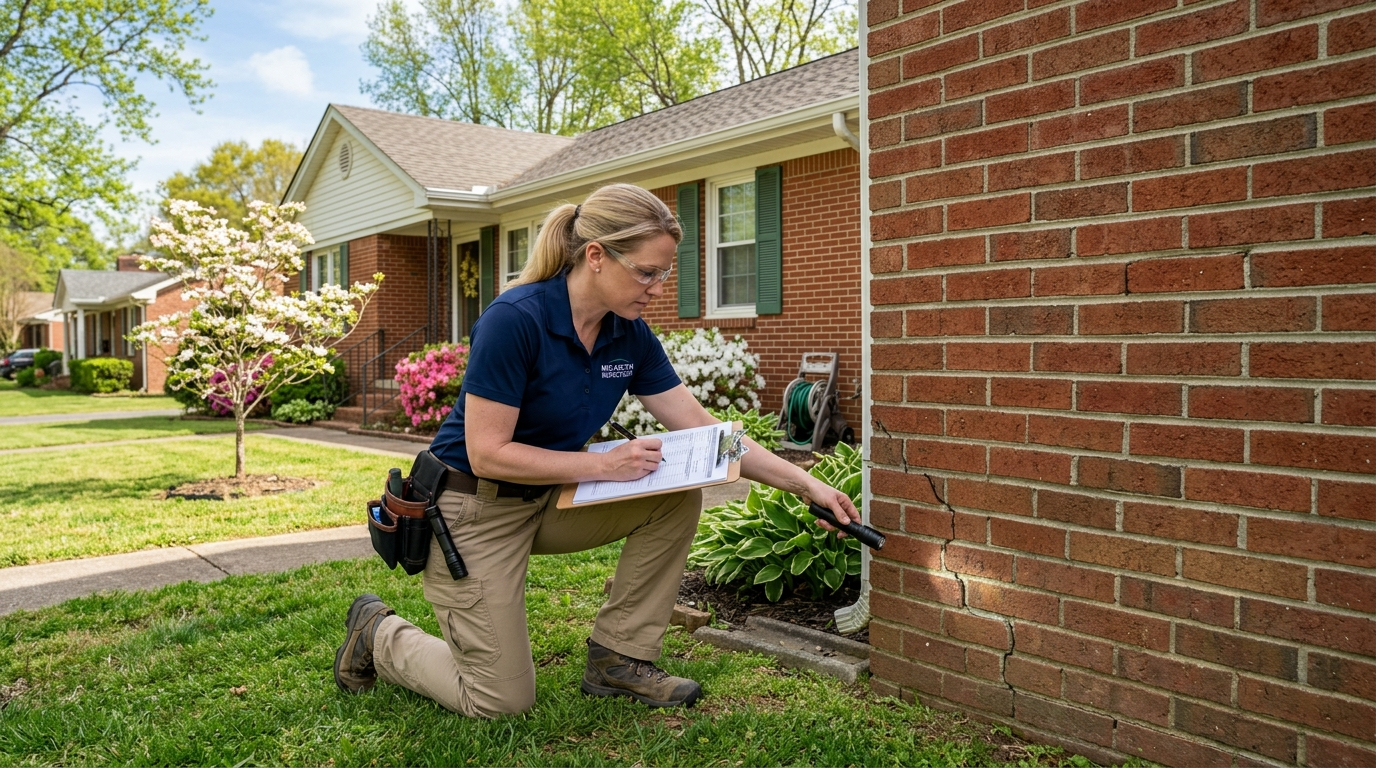
In East Tennessee specifically, foundation issues are common due to the clay-heavy soil that expands and contracts with moisture changes. Horizontal cracks in block foundations, stair-step cracks in brick veneer, and bowing walls are all flags that indicate potential structural movement. Not every crack is catastrophic — hairline vertical cracks in poured concrete are often normal settling. But horizontal cracks or cracks wider than 1/4 inch warrant a structural engineer's evaluation ($300–$600).
Roofing
- Shingle condition: Missing, curling, cracked, or granule loss
- Flashing: Around chimneys, vents, skylights, and valleys
- Gutters and drainage: Proper attachment and water flow
- Age assessment: Approximate remaining lifespan
Tennessee's severe weather — hail, high winds, and the occasional ice storm — takes a real toll on roofing. A roof replacement in East Tennessee runs $8,000–$18,000 for a standard 3-bedroom home (architectural shingles). If the inspector notes significant wear, get a specialist roofing estimate before negotiating. Insurance companies are increasingly strict about roof age — many Tennessee carriers won't write a new policy on a home with a roof over 15 years old without an inspection, and some won't cover roofs over 20 years at full replacement cost.
HVAC Systems
- Heating: Furnace or heat pump operation, age, condition
- Cooling: AC compressor, refrigerant lines, air handler
- Ductwork: Visible damage, insulation, connections
- Thermostat: Function and calibration
HVAC is the most expensive system in the house after the structure itself. A new HVAC system in Tennessee costs $6,000–$14,000 depending on size, efficiency, and whether ductwork needs modification. Tennessee's climate demands both heating and cooling, so both sides of the system get heavy use. Average HVAC lifespan is 15–20 years. If the system is over 15 years old, budget for replacement within 3–5 years regardless of its current condition.
Plumbing
- Water heater: Age, condition, capacity
- Supply lines: Material (copper, PEX, polybutylene), pressure, leaks
- Drain/waste/vent system: Proper drainage, signs of blockage
- Fixtures: Function and condition
Homes built in Tennessee between 1978 and 1995 may have polybutylene (poly-B) piping — a gray plastic pipe that was widely used but has since proven prone to failure. Poly-B isn't automatically a deal-breaker, but many insurance companies charge higher premiums or require replacement. Full re-piping of a Tennessee home costs $4,000–$10,000. If the inspector notes poly-B, factor that into your negotiation.
Electrical System
- Service panel: Capacity (100 amp, 200 amp), condition, proper labeling
- Wiring type: Romex, aluminum, knob-and-tube
- Outlets and switches: Grounding, GFCI protection in wet areas
- Visible hazards: Double-tapped breakers, improper connections
Older Tennessee homes (pre-1970s) may have aluminum wiring or outdated panels (Federal Pacific, Zinsco). Both present fire risks and may affect your insurance eligibility. Panel upgrades cost $1,500–$3,000, and full rewiring of an older home can run $8,000–$20,000.
Other Areas Covered
- Insulation and ventilation: Attic insulation levels, soffit venting, moisture control
- Windows and doors: Seal integrity, operation, draft issues
- Interior surfaces: Walls, ceilings, floors for signs of water damage or structural movement
- Exterior: Siding, trim, grading, drainage away from foundation
- Crawl space: Moisture barriers, wood-destroying insect damage, standing water
What a Standard Inspection Does NOT Cover
Understanding the limits is as important as understanding the scope. A standard Tennessee home inspection does not include:
- Termite / Wood-Destroying Insect (WDI) inspection — This is a separate inspection ($75–$125) and is typically required by Tennessee lenders. Given East Tennessee's climate, termite activity is common. Your agent should arrange this separately.
- Radon testing — Tennessee has significant radon exposure in certain areas, particularly in East Tennessee's limestone geology. A radon test adds $125–$175. The EPA recommends testing every home in Tennessee.
- Sewer scope — For homes over 30 years old, a camera inspection of the sewer lateral ($250–$400) can identify root intrusion, collapsed lines, or clay pipe deterioration that won't show up in a standard inspection.
- Mold testing — Inspectors note visible mold, but laboratory testing for mold species identification is separate ($300–$600).
- Well and septic — If the property uses well water or a septic system (common in Anderson, Blount, and Sevier counties), these require specialized inspections.
The Top 5 Red Flags Tennessee Buyers Should Watch For
1. Active Water Intrusion
Water stains on basement walls or crawl space, standing water, musty smells, or efflorescence (white mineral deposits on block walls) all indicate water management problems. In East Tennessee's hilly terrain with clay soils, water intrusion is the most common and most expensive issue to solve properly. Exterior waterproofing and French drain systems can cost $5,000–$15,000.
2. Foundation Movement
Sticking doors and windows, cracks running from window corners, uneven floors (test with a level or marble), and separated trim boards can indicate active structural settling. Minor settling is normal in Tennessee's soil conditions. Active movement — especially horizontal cracking or bowing — requires immediate professional evaluation.
3. Electrical Panel Issues
Federal Pacific Stab-Lok panels and Zinsco panels have documented safety concerns and may not trip during overloads, creating fire risk. If the inspection identifies either brand, plan for a panel replacement ($1,500–$3,000). Many Tennessee insurance companies will require replacement before issuing a policy.
4. Roof at End of Life
If the roof has 2 or fewer years of remaining life, it's functionally a guaranteed expense. In a negotiation, this is your strongest leverage point — a new roof is a quantifiable cost that sellers cannot dispute. Get a roofing estimate before submitting your repair request.
5. Unpermitted Work
Additions, finished basements, or converted garages without proper permits create legal and insurance complications. In Tennessee, unpermitted work may not be covered by insurance, can affect property tax assessments, and can create problems when you eventually sell. Your inspector may note visible signs of amateur work — misaligned framing, non-code-compliant electrical, or structural modifications that lack engineering.
How to Negotiate After the Inspection
Your inspection report is not a wish list — it's a negotiation tool. Here's how Tennessee buyers can use it effectively:
- Prioritize safety and major systems. Focus repair requests on items that affect safety (electrical, structural, water) and major systems (roof, HVAC, plumbing). Asking sellers to repaint walls or replace outdated fixtures weakens your negotiating position.
- Get contractor estimates. Replace vague concerns with specific dollar amounts. "The roof needs replacement" becomes "ABC Roofing quoted $12,500 for a full tear-off and architectural shingle installation." Numbers move negotiations.
- Request credits over repairs. Seller-completed repairs are often done at minimum cost with minimum quality. A closing credit of $12,500 lets you hire your own contractor and control the outcome.
- Know when to walk away. If the inspection reveals structural issues, active pest infestation, environmental hazards (asbestos, lead, mold), or significantly more repairs than expected, your inspection contingency gives you the legal right to terminate. Use it.
At Your Home Sold Guaranteed Realty — Kings of Real Estate, Tracy King's team guides buyers through every inspection negotiation with data-driven strategies. When you're buying a home, make sure your team is protecting your investment — not just closing the deal. And once you've closed, make sure your home is properly insured. The team at All Seasons Insurance Group specializes in matching Tennessee homeowners with coverage that addresses the specific risks identified during the inspection process.
Remember: Your Home Sold Guaranteed or I'll Buy It!*
Frequently Asked Questions
How much does a home inspection cost in Tennessee?
A standard home inspection in Tennessee costs $300–$550 depending on the home's size, age, and location. Additional tests — radon ($125–$175), termite/WDI ($75–$125), sewer scope ($250–$400) — are separate. For a typical 3-bedroom home under 2,500 square feet, expect to spend $350–$450 for a thorough inspection.
Can I attend the home inspection?
Absolutely, and you should. Attending the inspection lets you see issues firsthand, ask questions in context, and learn about the home's maintenance needs. Most Tennessee inspectors encourage buyer attendance and will walk you through their findings in real time. Plan for 2–4 hours depending on the home's size.
Should I waive my inspection contingency to win a competitive offer?
Almost never. In Tennessee's 2026 market, some sellers prefer offers without inspection contingencies. But the financial risk is enormous — a $400 inspection can protect you from $20,000+ in hidden repairs. Instead of waiving entirely, consider shortening the inspection period (from 10 days to 5) or offering to accept the home "as-is" for minor items while retaining the right to terminate for major defects.
What happens if the inspection reveals major problems?
You have several options: negotiate a repair credit, ask the seller to complete repairs before closing, renegotiate the purchase price, or exercise your inspection contingency and terminate the contract. In Tennessee, your real estate contract's inspection clause defines your specific rights and timelines. Work with your agent to determine the best strategy based on the severity and cost of the issues discovered.
Do new construction homes need inspections?
Yes. New construction homes absolutely need inspections. While the home is new, the workmanship may not be perfect. Common issues in Tennessee new construction include improper grading (water draining toward the foundation), HVAC ductwork disconnections, missing insulation in spots, and cosmetic framing issues. A pre-closing inspection on new construction costs the same $300–$550 and can identify issues while the builder is still obligated to fix them under warranty.
🔒 EXCLUSIVE ACCESS
See Homes Before They Hit the Market
Get first access to off-market and pre-market listings across Tennessee. The best deals never make it to Zillow — see them first at ComingSoonHomesTN.com.
Browse Off-Market Listings →Powered by Your Home Sold Guaranteed Realty — Kings of Real Estate
FREE GUIDE
🚩 9 Buyer Traps You Must Avoid
Don't fall for the most common buyer mistakes that cost thousands. Get this free guide before your next showing.
Subscribe & Get Your Free Copy →Join our free newsletter — we'll send it straight to your inbox.
*Tracy and seller must agree on price and possession date